

A trip back in time to the early 1900’s
The Classical Banjo and the Legacy of Alfred A. Farland
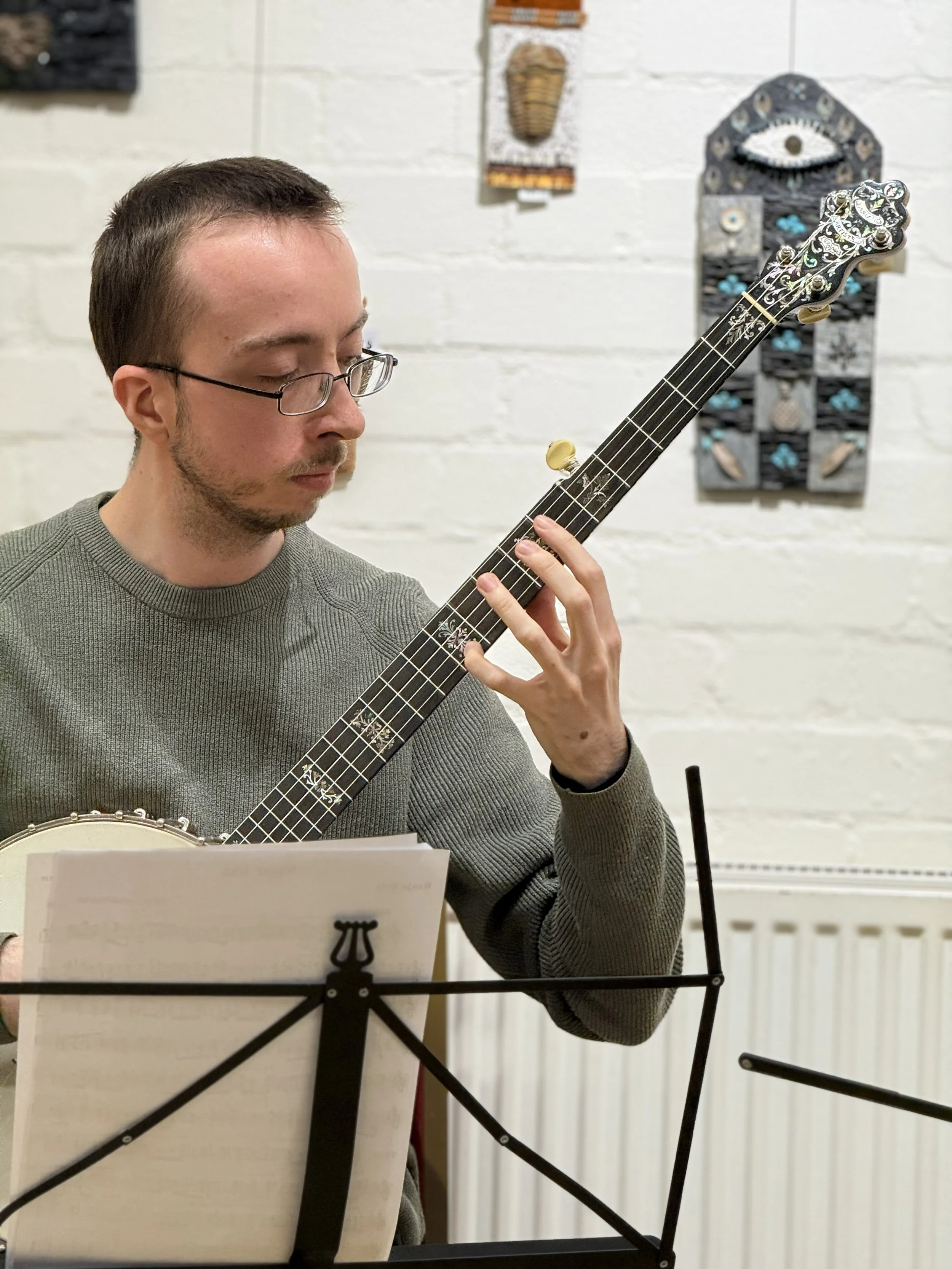
Visitors to our June meeting were treated by Steven to something rather unusual, a performance on a banjo that sounded very different from what many people might expect. The instrument was an Alfred A. Farland banjo, associated with one of the most influential figures in the history of the classical banjo movement.
Today, the banjo is often associated with folk, bluegrass, and traditional American music. However, during the late nineteenth and early twentieth centuries, it occupied a very different place in musical life. At that time, the banjo was frequently heard in concert halls, music societies, and drawing rooms, where skilled performers presented transcriptions of classical works alongside original compositions written specifically for the instrument.
One of the leading figures of this movement was Alfred Adolphus Farland (1864–1954). Farland was a celebrated banjo virtuoso who devoted much of his career to demonstrating that the instrument was capable of serious artistic expression. He performed arrangements of works by composers such as Bach, Beethoven, Mendelssohn, and Chopin, bringing music normally associated with the piano or orchestra into the banjo repertoire.
Farland's concerts attracted large audiences, and he became one of the most prominent advocates of the instrument in North America. At a time when the classical guitar was still establishing itself in concert life, the banjo often enjoyed a higher profile in popular and middle-class musical culture. It was studied formally, taught in music schools, and supported by a substantial body of published music.
Farland was also closely involved in instrument design. He believed that many banjos of the period produced a tone that was too bright and metallic for classical performance. In response, he promoted instruments featuring wooden rims and other design refinements intended to create a warmer, more rounded sound. Banjos bearing the A. A. Farland name were produced to reflect these ideas and were aimed at serious performers.
The instrument heard at our meeting demonstrated these qualities beautifully. Unlike the sharp, highly percussive sound often associated with modern banjos, Steven's Farland instrument possessed a mellow, refined voice. Its wooden construction produced a warm and balanced tone that was particularly well suited to the classical repertoire he performed.
Listeners heard works by Alfred Cammeyer, J. S. Bach, and Thomas J. Armstrong, all of which highlighted the expressive possibilities of the instrument. The performance served as a reminder that the history of fretted instruments is far richer and more varied than many people realise. While the guitar ultimately became the dominant classical.
For those that are intrigued, you can listen to Steven play here.