

A Glimpse into Banjo History, A Classic from Birmingham
Steven's remarkable instrument was made by George P. Matthew in Birmingham, sometime between 1895 and 1910, a fascinating period in British instrument making when high demand for domestic music-making met a blend of traditional craftsmanship and emerging industrial techniques.
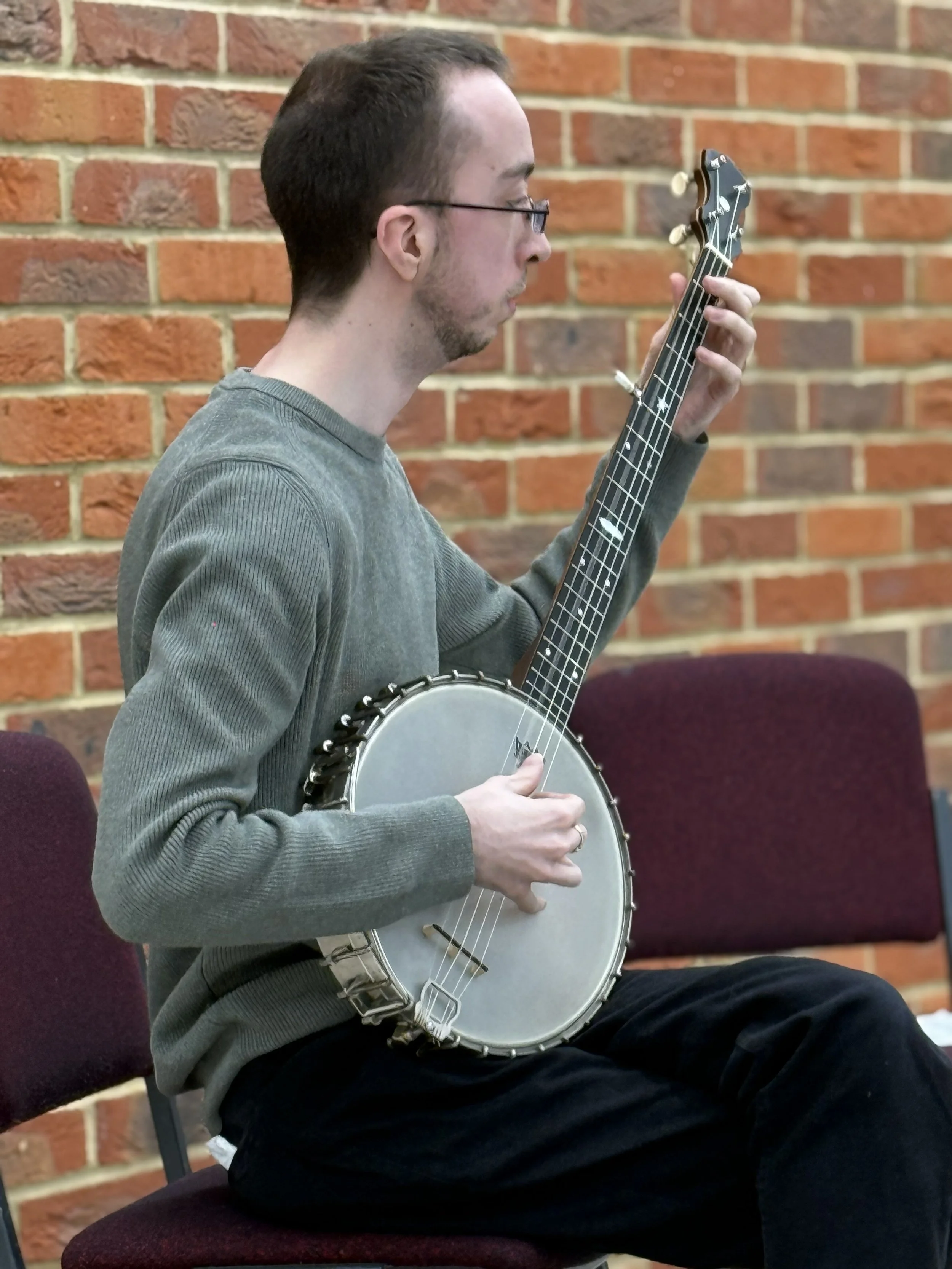
Steven's remarkable instrument was made by George P. Matthew in Birmingham, sometime between 1895 and 1910, a fascinating period in British instrument making when high demand for domestic music-making met a blend of traditional craftsmanship and emerging industrial techniques.
Though not widely documented, George P. Matthew was part of Birmingham’s rich instrument-making tradition, likely working as a skilled craftsman during the height of the classic banjo era.
One of the instrument’s most distinctive features is the spunover rim, where a thin layer of metal is spun over the wooden body. This was a common technique of the time, giving the instrument both durability and a unique tonal character.
Although it was already in working condition when acquired, it still benefited from some careful adjustments. The instrument was taken apart and sympathetically restored: the original friction tuners were lubricated with beeswax, the bridge was replaced, the head was retuned, and the pot tightened. Interestingly, even the tools had to match the era—modern flathead screwdrivers proved too thick, so Victorian screwdrivers were needed to do the job properly.
This instrument falls into the category of a “classic banjo,” a style popular between around 1880 and 1920. Unlike the bluegrass banjos most people are familiar with today, classic banjos were strung with gut and played using a right-hand technique similar to classical guitar.
During this period, the banjo was hugely popular across both Britain and America—arguably more so than the guitar at the time. Typically tuned to gCGBD, its repertoire ranged from light, popular pieces to more formal classical arrangements.
A wonderful piece of musical history, brought back to life and ready to be played once again.
You can see Steven getting into the spirit of Joe Morley's Donkey Laugh here. For those that have not done so yet, his website is worth a visit.