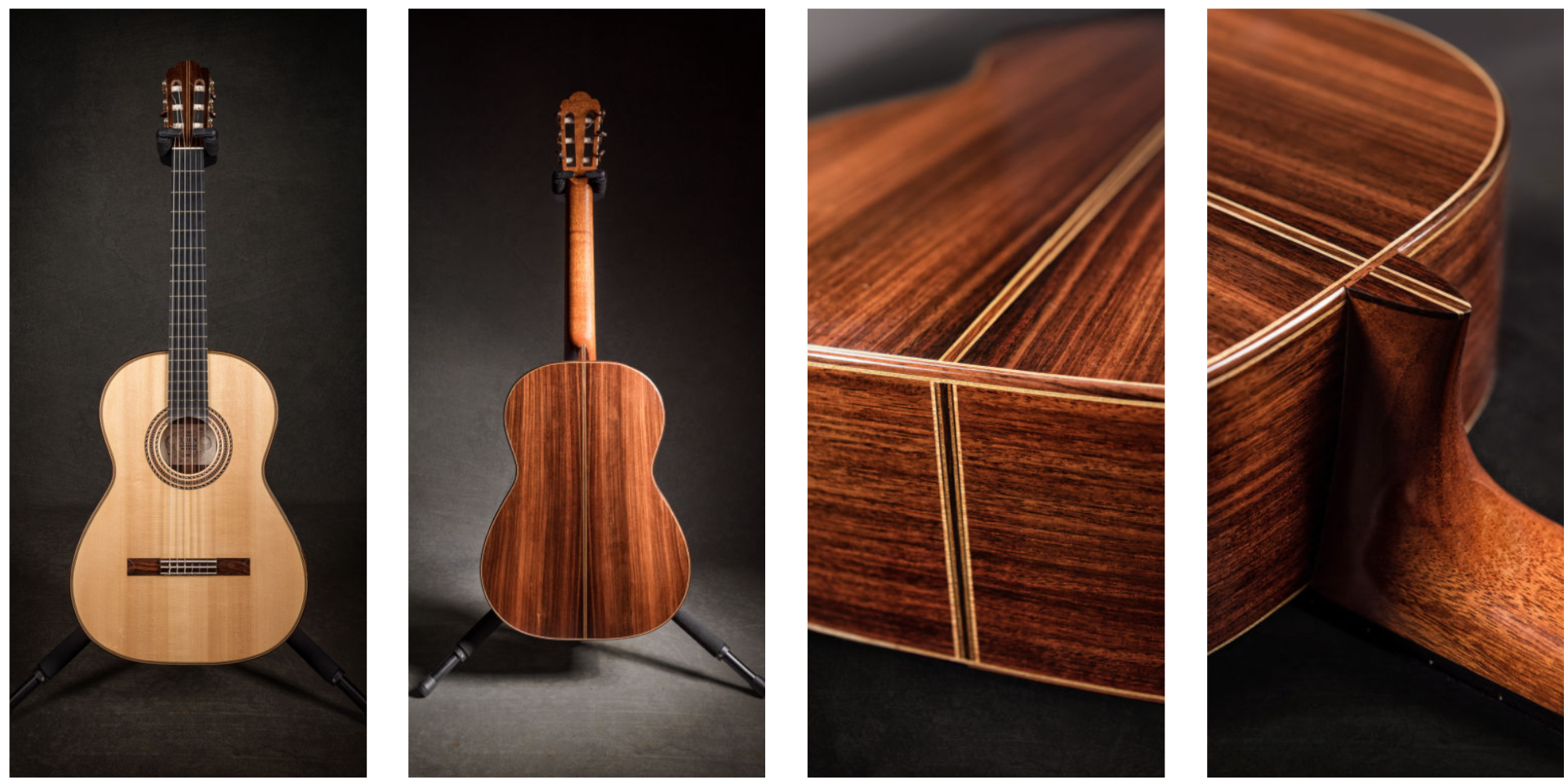
Petros’s Stephen Eden Hauser Replica.
Alongside the restoration of period instruments, it’s equally fascinating to explore how historic designs continue to live on through modern craftsmanship. One such example is a replica of a Hermann Hauser guitar, built by Stephen Eden, an instrument that beautifully bridges past and present.
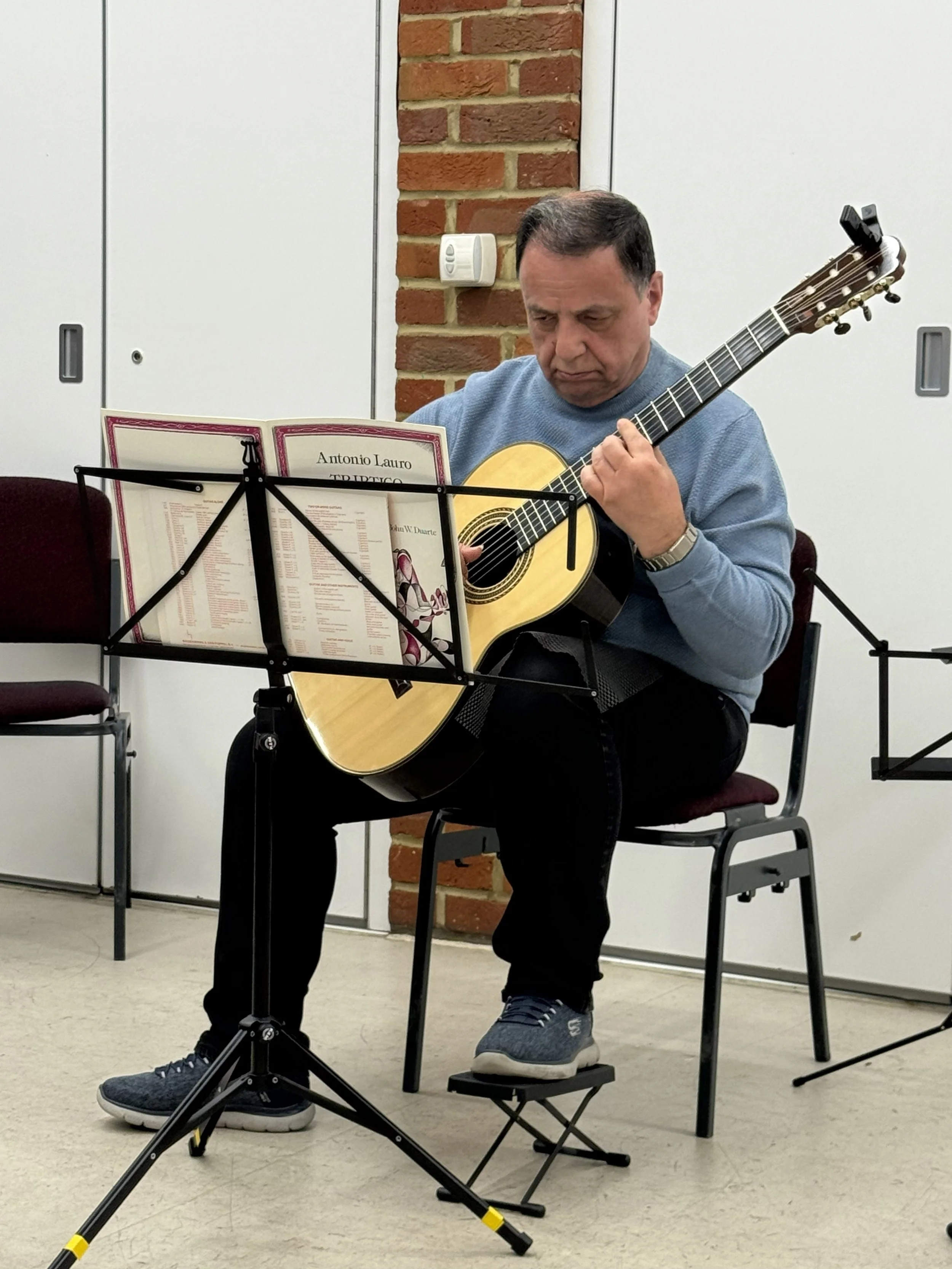
Hermann Hauser needs no introduction, and Stephen Eden’s replica pays careful homage to this legacy. Built with a deep respect for the original Hauser design, it captures the hallmark tonal characteristics: a warm, rounded bass, singing trebles, and an overall clarity that allows individual voices within the music to emerge distinctly.
Eden himself is part of a small but dedicated group of contemporary luthiers committed to historically informed guitar making. His work reflects a close study of original instruments, not just in their dimensions and materials, but in the subtleties of construction that give them their voice. Rather than producing generic “copies,” his approach is more interpretative: aiming to recreate the musical character and playing experience of a Hauser, while ensuring the instrument functions reliably in a modern context. This balance between fidelity and practicality is what makes his instruments particularly appealing to players who value both authenticity and usability.
What makes a replica like this especially compelling is not just its faithfulness to a historical model, but its role as a living instrument. While original Hauser guitars are rare, valuable, and often confined to collections or concert stages, a modern build allows players to experience something very close to that sound world in a more accessible and practical way.
In much the same way as the classic banjo evokes a rich and often overlooked musical tradition, the Hauser-style guitar connects us to a pivotal moment in the evolution of classical music performance. Both instruments, in their own ways, remind us that craftsmanship and musical culture are never static, they are continuously rediscovered, reinterpreted, and brought back to life.
You can see more about Stephen Eden here.